




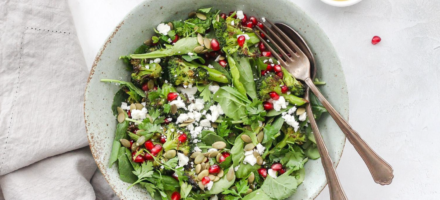
Roasted Broccoli Salad
Try this roasted broccoli salad with baby kale, pomegranate, pumpkin seeds and feta for a colourful, fibre-rich lunch. INGREDIENTS 1 head ...
0 item(s)

Free delivery on tests
If you live with bloating and constipation, you may have heard of methane SIBO, now called intestinal methanogen overgrowth (IMO). You may have tried diets, supplements or medicines and still feel stuck. One part of the methane SIBO story rarely gets talked about. That part is bile.
Most of us think of bile as a fat digester. Yet research suggests it may also act as a natural brake on the microbes that make methane. In this article, we explain what IMO is, how bile fits in, and what the science can and cannot tell us yet. We also share practical steps and testing options to help you understand your own gut.
Methane SIBO, now called intestinal methanogen overgrowth (IMO), is when too many methane-making microbes live in the gut. These microbes are called methanogens. They are not bacteria. They belong to a separate group of life called archaea. The main one in humans is Methanobrevibacter smithii [1].
SIBO stands for small intestinal bacterial overgrowth. It means too many bacteria are living in the small intestine. The 2020 American College of Gastroenterology (ACG) guideline introduced the term IMO for the methane type. This is because methanogens are not bacteria, and because they can overgrow in both the small and large intestine [1].
Hydrogen SIBO and methane SIBO (IMO) are told apart by which gas is raised on a breath test [10].
| Hydrogen SIBO | Methane SIBO (IMO) | |
|---|---|---|
| Microbes involved | Bacteria | Methanogens (archaea) |
| Where they overgrow. | Small intestine | Small and/or large intestine |
| Breath test marker | Rise in hydrogen of 20 ppm or more by 90 minutes | Methane of 10 ppm or more at any point |
| Typical bowel pattern | Diarrhoea | More often constipation [3] |
Methanogens make methane from hydrogen gas made by your gut bacteria. They do not eat your food directly. Bacteria ferment fibre and sugars and release hydrogen. Methanogens then join this hydrogen with carbon dioxide to make methane. So the more hydrogen your bacteria make, the more fuel methanogens have.
Excess methane is linked to constipation and slower gut transit. A review of 19 studies found that people with IMO had more frequent and more severe constipation, and less diarrhoea, than people without it [3].
Methane may also act on the gut directly. In animal experiments, methane slowed intestinal transit and changed how the small intestine contracts [2]. The same review warned that symptoms alone are not a reliable way to diagnose IMO. A SIBO breath test is needed to confirm it [3].
Bile digests fat, but it also helps control which microbes grow in your small intestine [5]. Bile is a fluid made by your liver and stored in your gallbladder. When you eat, a hormone called cholecystokinin (CCK) tells the gallbladder to squeeze. Bile then flows into the small intestine [4].
The best-known job of bile is to break fat into small droplets. This helps you absorb fat and the fat-soluble vitamins A, D, E and K. Its second job, keeping microbes in check, matters just as much for gut health.
Bile acids, the active parts of bile, protect the small intestine in two ways [5]:
In mice, blocking bile flow led to bacterial overgrowth and damage to the lower small intestine. Mice without FXR had more bacteria there and a weaker gut barrier [6]. This is animal research, so we cannot assume the same applies to humans. Still, it is one reason bile is described as part of the gut’s own defence system [5].
Yes. Gut bacteria turn primary bile acids, made by the liver, into secondary bile acids [4]. Many gut microbes also carry an enzyme called bile salt hydrolase, which breaks bile salts down. This includes Methanobrevibacter smithii, the main methane-maker [9]. So bile and microbes shape each other.
Most bile acids are absorbed back near the end of the small intestine, in an area called the ileum. They then travel back to the liver to be used again [4]. A small amount passes on into the colon each day. This matters for methane SIBO, because bile acids reaching the colon may affect methanogens [7].
Possibly. Early lab research shows bile acids can reduce methane production, but this has not been tested as a treatment for methane SIBO. The key study was published in the journal Gut in 1995 by Florin and Woods, from the University of Queensland in Australia [7]. They wanted to know why some people make methane and others do not.
In the Florin and Woods study, researchers took stool samples from five people known to produce methane. They mixed these samples with human bile at strengths from 0.3% to 30% in the lab. The bile came from three hospital patients who had a drain fitted to their bile duct. The team then measured how much methane the samples made [7].
In Florin and Woods’ lab work, every human bile sample reduced methane production [7]:
In the same 1995 study, one patient had their bile drained out of the body, so little reached the gut. While the drain was in place, they produced methane. Once normal bile flow was restored, they became a non-methane producer [7]. This is a single case, so it shows what is possible rather than what usually happens. An earlier paper from the same lead author had also proposed that bile acid helps control methane in the colon [8].
Florin and Woods suggested that bile acids reaching the caecum, the first part of the colon, may hold back methanogens there. Combined with gut transit speed, this could reduce how many methanogens settle in the colon. They noted it may help explain why people with faster colonic transit, and people with Crohn’s disease in the small intestine, tend to produce less methane [7].
Bile may also work further upstream. By helping control bacteria in the small intestine, bile may limit how much hydrogen is made. Less hydrogen means less fuel for methanogens. This upstream idea links the studies above, but it has not been tested directly in IMO.
The evidence linking bile and methane is interesting but early. It points to a real link. It does not prove that low bile causes IMO, or that supporting bile will reduce methane in a given person. Here is what to keep in mind.
So it is fair to see bile as one factor among many. Gut transit, diet, the wider microbiome and other health conditions all play a part too.
Health conditions, medicines and gut transit speed all change how much bile acid reaches your gut. Some of these factors are well understood, while others are still being studied.
Blocked bile flow. In animal studies, blocking the bile duct led to bacterial overgrowth in the small intestine [6]. In people, blocked bile flow is a medical issue that needs a doctor’s care.
Medicines that bind bile acids. In the 1995 lab study, cholestyramine, a medicine that binds bile acids, removed bile’s effect on methane [7]. These medicines are prescribed for good reasons, so never stop one without speaking to your doctor.
The health of the lower small intestine. Most bile acids are absorbed back in the ileum, at the end of the small intestine [4]. Florin and Woods noted that people with Crohn’s disease in this area tend to produce less methane [7]. This is an observation, not proof of cause.
Gut transit time. Slow transit gives methanogens more time to grow. In animal experiments, methane itself slowed transit [2]. This can create a cycle that keeps symptoms going.
These factors show that bile, transit and methane are closely linked. They also show why testing and working with a practitioner matter more than guessing.
Regular meals with some healthy fat, keeping bowel movements regular and reviewing medicines with your doctor all support normal bile flow. There are no trials showing that these steps reduce methane in people with IMO. They support normal digestion and gut movement, and they are low risk for most people. Think of them as a foundation rather than a treatment.
Your gallbladder releases bile when CCK signals that food has arrived [4]. Regular meals give it a steady rhythm. A little healthy fat, such as olive oil, oily fish, nuts or avocado, gives your body a reason to release bile.
Slow transit and methane can feed each other, so keeping things moving matters. The NHS suggests more fibre, plenty of fluids and staying active to help with constipation [11].
If you have IBS or IMO, go carefully with fibre. Fermentable fibres, found in high-FODMAP foods, can make bloating worse at first. Increase fibre slowly. A GP may refer you to a dietitian for a low FODMAP diet if general changes have not helped your IBS [14].
Bitter foods such as rocket, chicory and globe artichoke are traditionally used to support digestion. Herbal bitters and supplements such as ox bile and TUDCA (a bile acid) are also popular. However, there are no human trials of these for IMO. They are not right for everyone, including people with gallstones, liver disease or bile duct problems, and during pregnancy. Please speak to your GP or a qualified practitioner before you start them.
Some medicines bind bile acids or affect gut movement. If you take a regular medicine and have IMO symptoms, ask your doctor or pharmacist whether it could play a part. Never stop a prescribed medicine on your own [11].
A SIBO breath test is the standard way to check for raised methane. Under the North American Consensus, a methane level of 10 parts per million (ppm) or more at any point during the test counts as methane-positive [10]. Symptoms alone cannot tell you whether you have IMO, because bloating and constipation have many possible causes [3].
Treatment for methane SIBO should be agreed with a doctor or qualified practitioner after testing. The ACG guideline advises against treating without a test first. It lists antibiotic options for intestinal overgrowth, and says treating any underlying cause is the main way to prevent it coming back [1]. Diet, gut movement and the wider microbiome are usually part of the plan too.
At Healthpath, we offer two plans that can help. Both include a review of your results and symptoms by one of our practitioners, a personalised food, supplement and lifestyle plan, and a recorded video explaining your results.
| Feature | SIBO Plan | Ultimate Gut Plan |
|---|---|---|
| Test type | At-home breath test | At-home stool test |
| What it looks at | Hydrogen and methane gases over time | Your wider gut microbiome and markers of gut health |
| Best suited to | Bloating, constipation, or suspected IMO or SIBO | Long-standing gut symptoms with no clear cause, or a whole-gut picture |
| Practitioner review and personal plan | Yes | Yes |
If constipation and bloating are your main concern, the SIBO Plan is usually the best place to start. If you want a broader view of your gut health, the Ultimate Gut Plan looks at the bigger picture. The two tests can be used together for a fuller picture.
See your GP first if you notice any of the warning signs below. Gut symptoms are common, but these need checking by a doctor [12, 11].
Testing and support from a practitioner can sit alongside your GP’s care. They are not a replacement for it.
Yes, broadly. IMO is the newer name for what used to be called methane SIBO. The name changed because methanogens are archaea, not bacteria, and they can overgrow in the large intestine as well as the small intestine [1].
In the lab, yes. A 1995 study found human bile reduced methane production in stool samples, and blocking the bile acids removed the effect [7]. This has not been shown to work as a treatment in people.
We do not know that yet. Early research suggests bile acids can reduce methane production, but no study has shown that low bile causes IMO in people. Bile is best seen as one of several factors.
There are no clinical trials of ox bile or TUDCA for methane SIBO. Some people use bile or bitter supplements as part of a wider plan with a practitioner. They are not suitable for everyone, including people with gallstones or liver problems, so please get advice before you start.
Under the North American Consensus, a methane level of 10 ppm or more at any point during the test is classed as methane-positive [10]. Your practitioner will look at your result alongside your symptoms.
Treatment should follow a positive test and be agreed with a doctor or qualified practitioner. Options may include medicines, diet changes and support for gut movement [1].
Methane is strongly linked to constipation. People with IMO have more frequent and more severe constipation than people without it [3].
Bile still flows from the liver after gallbladder removal, but it is no longer stored and released in the same way. How this affects methane has not been well studied. If you have ongoing gut symptoms after gallbladder removal, discuss them with your GP and practitioner.
This article is for educational purposes only. It is not intended to diagnose, treat, cure or prevent any disease. Always speak to your GP or a qualified healthcare professional before making changes to your diet, supplements or medicines.
