Histamine Intolerance Symptoms
Histamine Intolerance Symptoms: A Complete Guide to Recognition, Diagnosis, and Management
Understanding Histamine Intolerance
Histamine intolerance is a condition that affects approximately 15-20% of the population, yet it remains widely misunderstood and underdiagnosed. This condition occurs when your body accumulates more histamine than it can effectively eliminate, leading to a cascade of symptoms that can significantly impact your quality of life.
Histamine is a naturally occurring chemical in your body that plays crucial roles in immune responses, digestion, and neurological function. However, when the balance between histamine accumulation and breakdown is disrupted, various symptoms can emerge throughout multiple body systems.
What Causes Histamine Intolerance?
The primary enzyme responsible for breaking down histamine in your digestive tract is diamine oxidase (DAO). When DAO activity is reduced or blocked, histamine can accumulate to problematic levels. Several factors contribute to this imbalance:
Genetic Factors
Research has identified over 50 single-nucleotide polymorphisms in the gene encoding DAO that can affect enzyme activity. These genetic variations can predispose individuals to histamine intolerance, with certain polymorphisms being more prevalent in specific ethnic groups.
Gut Health Issues
Your gut microbiome plays a critical role in histamine metabolism. Recent studies have revealed that certain bacteria can produce significant amounts of histamine:
- Klebsiella aerogenes – produces up to 100 times more histamine than other bacterial isolates
- Enterococcus faecalis and Enterococcus faecium – major histamine producers
- Proteus mirabilis – common histamine-producing bacteria in the gut
- Escherichia coli – certain strains produce elevated histamine levels
- Morganella morganii – known for histamine production
Research shows that patients with histamine intolerance often have gut dysbiosis characterised by an overabundance of these histamine-producing bacteria and a reduction in beneficial bacteria like Ruminococcus, Prevotellaceae, Faecalibacterium, and Faecalibacterium prausnitzii.
Could your gut bacteria be contributing to your symptoms? Consider getting a comprehensive microbiome test to identify histamine-producing bacteria in your gut and take the first step toward understanding your condition.
SIBO Connection
Small Intestinal Bacterial Overgrowth (SIBO) has emerged as a significant contributor to histamine intolerance. SIBO creates a perfect storm for histamine problems:
- Bacterial overgrowth increases histamine production
- Intestinal inflammation damages DAO-producing cells
- Compromised gut lining allows more histamine absorption
- Multiple histamine-producing bacteria colonise the small intestine
Studies indicate that up to 78% of IBS cases may actually be due to SIBO, and many of these patients experience histamine intolerance symptoms.
Experiencing unexplained digestive symptoms? A SIBO breath test can help determine if bacterial overgrowth is at the root of your histamine issues.
Medications and Other Factors
Approximately 20% of the European population takes medications that can inhibit DAO activity, including:
- Verapamil (blood pressure medication)
- Clavulanic acid (antibiotic)
- Isoniazid (tuberculosis treatment)
- Various NSAIDs
Additional contributing factors include alcohol consumption, vitamin and mineral deficiencies (particularly vitamin C, copper, zinc, and vitamin B6), and hormonal fluctuations during the menstrual cycle.
Comprehensive Guide to Histamine Intolerance Symptoms
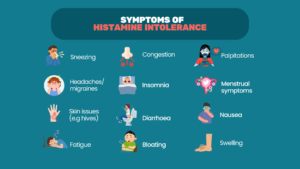
One of the most challenging aspects of diagnosing histamine intolerance is the diverse and non-specific nature of its symptoms. Because histamine receptors are distributed throughout the body, symptoms can affect virtually any organ system.
Gastrointestinal Symptoms (Most Common)
A landmark study of 133 patients with histamine intolerance found that gastrointestinal manifestations were the most frequent and severe:
- Bloating – present in 92% of patients (rated as the most severe symptom)
- Diarrhoea or loose stools – affects 71-77% of patients
- Abdominal pain – experienced by 68% of patients
- Postprandial fullness (feeling overly full after meals) – 66-73% of patients
- Constipation – 55% of patients
- Nausea – 53% of patients
- Dyspepsia (indigestion) – 69% of cases
- Early satiety – 66% of patients
- Abdominal cramping – 48% of patients
- Vomiting – 25% of patients (in severe cases)
Neurological Symptoms
The nervous system is particularly sensitive to histamine fluctuations:
- Headaches – affecting 91% of patients with histamine intolerance
- Dull, symmetrical headaches (57% of cases)
- Migraine or migraine-like symptoms with unilateral, throbbing pain (53% of cases)
- Fatigue and weakness – reported by 83% of patients
- Postprandial somnolence (drowsiness after meals) – 81% of patients
- Brain fog and difficulty concentrating – 54% of cases
- Dizziness – 53% of patients
- Muscle twitching or eyelid twitching – 61% of patients
Research shows that postprandial drowsiness is a particularly characteristic symptom that can serve as an early indicator of dietary lapses in those managing histamine intolerance.
Respiratory Symptoms
Upper respiratory symptoms affect approximately 95% of patients with confirmed histamine intolerance:
- Runny nose (rhinorrhoea) – 68% of patients
- Nasal congestion – 60% of patients
- Postnasal drip and throat clearing – 57% of cases
- Sneezing – 51% of patients
- Sore throat – 38% of patients
- Cough – 35% of patients
- Asthma or asthmatic symptoms (cough, wheezing, dyspnea) – 21% of patients
Interestingly, patients with suspected histamine intolerance visit primary care for upper respiratory symptoms approximately three times more frequently than those without the condition.
Skin Symptoms
Dermatological manifestations occur in 81-87% of histamine intolerance patients:
- Pruritis (itching) – most common skin symptom (48% of patients)
- Flushing – 24-29% of patients
- Urticaria (hives) – frequently reported
- Dermatitis and skin inflammation
- Swelling (angioedema)
- Eczema-like rashes
A 2024 study even identified oral manifestations of histamine intolerance, including persistent oral burning, sensitivity to acidic foods, and erythematous velvety macules on oral mucosa.
Cardiovascular Symptoms
While less common than other symptom categories, cardiovascular manifestations affect 55% of patients:
- Palpitations – 47% of cases
- Dizziness – 66% of patients
- Hypotension (low blood pressure)
- Tachycardia (rapid heart rate)
- Presyncope (feeling faint)
Psychological and Cognitive Symptoms
Mental health and cognitive symptoms occur in 77% of histamine intolerance patients:
- Anxiety
- Depression
- Mood swings
- Irritability
- Difficulty concentrating
- Brain fog
- Sleep disturbances
Reproductive Symptoms
- Menstrual cramps – more severe in histamine-intolerant individuals
- Worsening of symptoms during menstruation
- Notably, 96% of patients with histamine intolerance report significant improvement or complete resolution of symptoms during the second and third trimesters of pregnancy, likely due to placental DAO production increasing several hundredfold
Timeline and Patterns of Symptom Development
Recent research published in January 2025 has provided valuable insights into the temporal patterns of histamine intolerance symptoms:
Immediate Symptom Timeline (Following a Single Meal)
The average time between eating and symptom onset is approximately 1.1 hours, with symptoms typically appearing in this sequence:
- 0-30 minutes: Upper respiratory symptoms (runny nose, sneezing, nasal congestion)
- 30-60 minutes: Gastrointestinal symptoms (bloating, early satiety, abdominal discomfort)
- 60-120 minutes: General and neurological symptoms (postprandial drowsiness, fatigue, brain fog, headache)
This progression likely corresponds to food moving through the digestive system and histamine entering systemic circulation.
Symptom Severity Stages
Research has identified four distinct stages of histamine intolerance severity:
Stage 1 (Mild):
- Isolated, short-duration symptoms
- Postprandial drowsiness
- Mild bloating
- Occasional loose stools
- Muscle twitching
Stage 2 (Moderate):
- Previous symptoms plus moderate respiratory issues
- More frequent gastrointestinal symptoms
- Moderate headaches
- Symptoms lasting 1-3 days
Stage 3 (Severe):
- All previous symptoms
- Migraine-like headaches
- Significant gastrointestinal distress
- Multiple concurrent symptoms
- Persistent symptoms with intermittent flares
Stage 4 (Most Severe – Potential Mast Cell Activation):
- Complete symptom constellation
- Vomiting
- Severe migraines
- Flushing
- Prolonged attacks lasting 1-2 weeks
- Possible fever
- Multiple body systems affected simultaneously
The good news: dietary, supplement and lifestyle intervention typically results in gradual improvement, with patients moving from more severe stages back toward milder presentations or complete symptom resolution.
Key Diagnostic Indicators
While there is no single definitive test for histamine intolerance, several factors can help identify the condition:
Clinical Indicators
- Feeling more energetic on an empty stomach – 66% of patients
- Symptoms worsen in afternoon/evening after main meals – 62% of patients
- Strong family history – 70% have family members with similar symptoms
- Symptom improvement during pregnancy – 96% of patients
- Response to low-histamine diet – diagnostic gold standard
- 87% of patients can already associate their intermittent symptoms with meals
Laboratory Testing
Several testing approaches exist, though each has limitations:
Serum DAO Levels:
- 74% of all suspected cases show DAO levels below 10 kU/L
- 82% of confirmed histamine intolerance patients have low DAO
- Intra-subject variability limits reliability
- Best used in combination with other diagnostic methods
Histamine Challenge Test:
- Can determine individual tolerance limits
- 75mg histamine dose may trigger symptoms even in healthy individuals
- Requires specialist supervision
Genetic Testing:
- Can identify DAO and HNMT polymorphisms
- Adds value when combined with other diagnostic approaches
Microbiome Analysis: Research from 2022 showed that patients with histamine intolerance have significantly different gut microbiome composition, with higher levels of histamine-producing bacteria.
Ready to uncover the root cause? A comprehensive microbiome test can identify specific bacterial imbalances contributing to your histamine symptoms, providing personalised insights for targeted treatment.
Food-Symptom Diary
Keeping a detailed food and symptom diary remains one of the most valuable diagnostic tools. Track:
- All foods and beverages consumed
- Time of consumption
- Symptom onset time
- Type and severity of symptoms
- Duration of symptoms
High-Histamine Foods to Watch
Common dietary sources of histamine include:
- Fermented foods: Aged cheese, sauerkraut, kimchi, yogurt
- Alcoholic beverages: Wine (73% trigger), champagne (68% trigger), beer
- Processed meats: Various sausages (58% trigger), cured meats, deli meats
- Fish: Especially mackerel, tuna, sardines, anchovies
- Tomato products: Tomato concentrate (55% trigger), sauce, paste
- Vinegar and vinegar-containing foods: Pickles (34% trigger), condiments
- Leftovers and aged foods: Histamine increases with storage time
- Other triggers: Strong spices (52%), chocolate (35%), citrus fruits (39%), certain vegetables including eggplant and spinach
Management Strategies
Dietary Intervention
The low-histamine diet remains the gold standard for managing histamine intolerance:
Elimination Phase (3-6 weeks): Focus on fresh, unprocessed foods:
- Fresh fruits (except citrus)
- Fresh vegetables (except high-histamine varieties)
- Fresh poultry and meat
- Rice and potatoes
- Certain grains (gluten-free not required)
- Dairy can be included based on tolerance
Reintroduction Phase: Gradually reintroduce foods one at a time to identify personal tolerance levels. Studies show that dietary intervention results in:
- Significant reduction in symptom frequency and severity
- 94% of patients continue dietary management
- Average symptom severity score drops from 7.5/10 to 2.9/10
- Average frequency score decreases from 3.5 to 1.75
Supplementation Strategies
Several supplements may support histamine metabolism:
DAO Enzyme Supplements:
- Studies show improvement in at least one symptom in 93% of patients
- Take 10-15 minutes before meals
- Most effective with vitamin C as a cofactor
- Multiple clinical trials demonstrate efficacy
Recommended Product: Histaharmony
Quercetin:
- Natural antihistamine and mast cell stabiliser
- 500-1000mg daily in divided doses
- Enhanced absorption with vitamin C
Recommended Product: Quercetin Ascorbate
Vitamin and Mineral Cofactors:
- Vitamin C, copper, zinc, and vitamin B6 support DAO function
- Consider supplementation if deficient
Recommended Product: Zinc Balance (zinc and copper), P5P (vitamin B6).
Addressing Gut Health
Given the strong connection between gut dysbiosis and histamine intolerance:
- Test for SIBO: Breath testing can identify bacterial overgrowth
- Treat underlying infections: Address SIBO, SIFO, parasites, or dysbiosis
- Choose probiotics wisely: Avoid histamine-producing strains (some Lactobacillus species)
- Consider: Soil-based probiotics or Saccharomyces boulardii
- Support gut healing: Address intestinal permeability
Take the guesswork out of gut health. Our SIBO breath test provides clear answers about bacterial overgrowth, helping you target treatment effectively.
Lifestyle Modifications
- Stress management: Chronic stress can trigger mast cell activation and worsen symptoms
- Regular meal timing: Avoid prolonged gaps between meals
- Food freshness: Eat foods as fresh as possible; histamine increases with storage
- Proper food storage: Refrigerate foods promptly
- Medication review: Discuss DAO-blocking medications with your healthcare provider
When to Seek Professional Help
Contact a healthcare provider if you experience:
- Multiple unexplained symptoms after eating
- Symptoms that interfere with daily life
- Significant weight loss due to food restrictions
- Worsening symptoms despite dietary changes
- Severe reactions including difficulty breathing or rapid heart rate
A multidisciplinary approach involving gastroenterologists, allergists, nutritionists, and functional medicine practitioners often yields the best results.
The Path Forward: Hope for Histamine Intolerance
While histamine intolerance can be challenging to diagnose and manage, recent research provides encouraging insights:
- Symptoms follow predictable patterns that can be tracked and anticipated
- Dietary intervention is highly effective when properly implemented
- Symptom severity typically improves gradually with appropriate management
- Most patients achieve significant relief with personalised treatment plans
- Understanding gut health connections opens new treatment avenues
The key is persistence and a systematic approach to identifying triggers, supporting DAO function, and addressing underlying gut health issues.
Your Next Steps
- Keep a detailed food-symptom diary for at least two weeks
- Consider testing for:
- Microbiome composition and histamine-producing bacteria
- SIBO via breath testing
- DAO levels if available
- Work with a healthcare provider to rule out other conditions
- Trial a low-histamine diet under professional guidance
- Address gut health through targeted interventions
- Support DAO function with appropriate supplementation
Ready to take control of your health? Our comprehensive testing options, including microbiome analysis and SIBO breath tests, provide the insights you need to develop a personalised treatment plan. Combined with targeted supplements to support healthy histamine metabolism, you can finally find relief from persistent symptoms.
Conclusion
Histamine intolerance represents a complex condition that can manifest through dozens of symptoms affecting multiple body systems. While diagnosis can be challenging due to the lack of a single definitive test, understanding the characteristic symptom patterns, timeline of symptom development, and connection to gut health provides a roadmap for effective management.
The encouraging news from recent research is that with proper identification and management—including dietary modification, gut health optimisation, and appropriate supplementation—the vast majority of patients experience significant improvement in both symptom frequency and severity.
If you’re experiencing multiple unexplained symptoms, especially those that worsen after eating, histamine intolerance may be worth investigating. By working with knowledgeable healthcare providers and taking advantage of available testing and treatment options, you can uncover the root cause of your symptoms and reclaim your quality of life.
References
- Tamasi, J., & Kalabay, L. (2025). Spectrum, Time Course, Stages, and a Proposal for the Diagnosis of Histamine Intolerance in General Practice: A Nonrandomized, Quasi-Experimental Study. Journal of Clinical Medicine, 14(2), 311. https://doi.org/10.3390/jcm14020311
- Jochum, C. (2024). Histamine Intolerance: Symptoms, Diagnosis, and Beyond. Nutrients, 16(8), 1219. https://doi.org/10.3390/nu16081219
- Comas-Basté, O., Sánchez-Pérez, S., Veciana-Nogués, M. T., Latorre-Moratalla, M., & Vidal-Carou, M. D. C. (2020). Histamine Intolerance: The Current State of the Art. Biomolecules, 10(8), 1181. https://doi.org/10.3390/biom10081181
- Schnedl, W. J., Lackner, S., Enko, D., Schenk, M., Holasek, S. J., & Mangge, H. (2019). Evaluation of symptoms and symptom combinations in histamine intolerance. Intestinal Research, 17(4), 427-433. https://doi.org/10.5217/ir.2019.00075
- Sánchez-Pérez, S., Comas-Basté, O., Duelo, A., Veciana-Nogués, M. T., Berlanga, M., Latorre-Moratalla, M. L., & Vidal-Carou, M. C. (2022). Intestinal Dysbiosis in Patients with Histamine Intolerance. Nutrients, 14(8), 1774. https://doi.org/10.3390/nu14091774
- Shulpekova, Y. O., Nechaev, V. M., Popova, I. R., Deeva, T. A., Kopylov, A. T., Malsagova, K. A., Kaysheva, A. L., & Ivashkin, V. T. (2021). Food Intolerance: The Role of Histamine. Nutrients, 13(9), 3207. https://doi.org/10.3390/nu13093207
- Schnedl, W. J., & Enko, D. (2021). Histamine Intolerance Originates in the Gut. Nutrients, 13(4), 1262. https://doi.org/10.3390/nu13041262
- Maintz, L., & Novak, N. (2007). Histamine and histamine intolerance. The American Journal of Clinical Nutrition, 85(5), 1185-1196. https://doi.org/10.1093/ajcn/85.5.1185
- Rentzos, G., Weisheit, A., Ekerljung, L., & van Odijk, J. (2024). Measurement of diamine oxidase (DAO) during low-histamine or ordinary diet in patients with histamine intolerance. European Journal of Clinical Nutrition, 78, 726-731. https://doi.org/10.1038/s41430-024-01448-2
- Hrubisko, M., Danis, R., Huorka, M., & Wawruch, M. (2021). Histamine Intolerance—The More We Know the Less We Know. A Review. Nutrients, 13(7), 2228. https://doi.org/10.3390/nu13072228
- Izquierdo-Casas, J., Comas-Basté, O., Latorre-Moratalla, M. L., Lorente-Gascón, M., Duelo, A., Soler-Singla, L., & Vidal-Carou, M. C. (2019). Diamine oxidase (DAO) supplement reduces headache in episodic migraine patients with DAO deficiency: A randomized double-blind trial. Clinical Nutrition, 38(1), 152-158. https://doi.org/10.1016/j.clnu.2018.01.013
- Tuck, C. J., Biesiekierski, J. R., Schmid-Grendelmeier, P., & Pohl, D. (2019). Food Intolerances. Nutrients, 11(7), 1684. https://doi.org/10.3390/nu11071684
Disclaimer: This article is for informational purposes only and does not constitute medical advice. Always consult with qualified healthcare professionals before making changes to your diet, supplement regimen, or treatment plan.